
Teachings
- Home
- Teachings
Introduction
Mahua Kol was not only a warrior of resistance but also a teacher of wisdom, unity, and moral strength. His leadership was guided by values deeply rooted in tribal traditions and respect for nature.
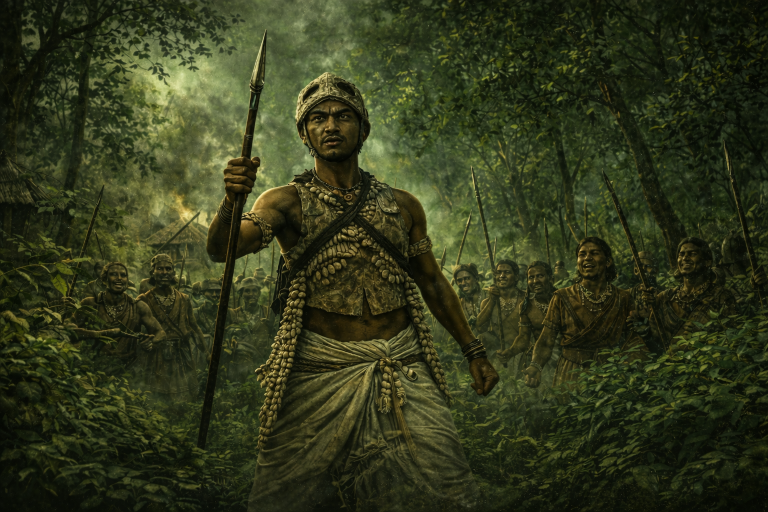
Through his actions and words
He demonstrated that true power lies not in domination, but in service, protection, and collective responsibility.
His teachings continue to inspire future generations.
His teachings continue to inspire indigenous communities and future generations.
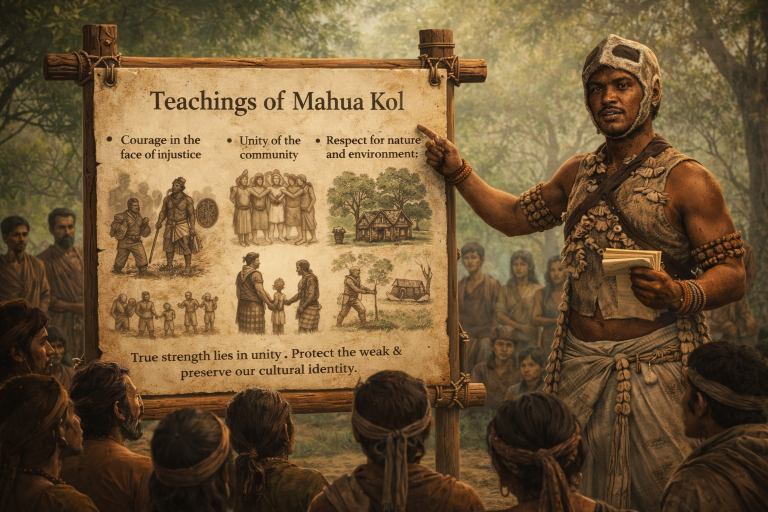
Core Values Promoted
Courage in the Face of Injustice
Mahua Kol believed that silence in the face of injustice leads to the loss of dignity, and he consistently reminded his people that accepting oppression without resistance slowly weakens the spirit of a community. For him, injustice was not only an attack on land or resources, but an assault on identity, self-respect, and ancestral honor. He taught his people to stand firm against exploitation and oppression without fear, encouraging them to recognize their inherent worth and the sacred responsibility they carried toward their homeland. Courage, according to him, was not reckless aggression or uncontrolled anger, but the steady inner strength to defend what is rightfully yours — land, identity, and freedom. He warned that anger without wisdom could divide the community, while disciplined courage rooted in unity could protect it. Through his words and actions, he demonstrated that bravery does not begin on the battlefield; it begins in the heart, in the quiet decision to refuse humiliation and to uphold truth even when the odds seem overwhelming.
Unity of the Community
For Mahua Kol, unity was the foundation of survival and strength, the invisible bond that transformed scattered individuals into an unbreakable community. He understood that external threats could only succeed when internal divisions weakened the tribe. Time and again, he reminded his people that divided communities are vulnerable, easily influenced, and quickly overpowered, but united communities are unstoppable. Unity, in his vision, was not merely standing side by side during moments of conflict; it was living in cooperation, mutual respect, and shared responsibility every single day. He believed that when trust flows between people, fear loses its power and courage becomes contagious.Mahua Kol encouraged cooperation between villages, age groups, and families, ensuring that no one felt isolated or insignificant. He broke down barriers of age and role by emphasizing that every member of the community had value. Youth brought energy, courage, and readiness to act. Elders offered wisdom, experience, and guidance rooted in tradition.
Leadership Philosophy
Mahua Kol believed that leadership was not a position of power, but a responsibility of service. In his view, a true leader does not command from above but stands among the people, sharing their struggles, fears, and hopes. Authority, he taught, must be earned through trust, integrity, and sacrifice. A leader must serve the people selflessly, placing the welfare of the community above personal gain or recognition.